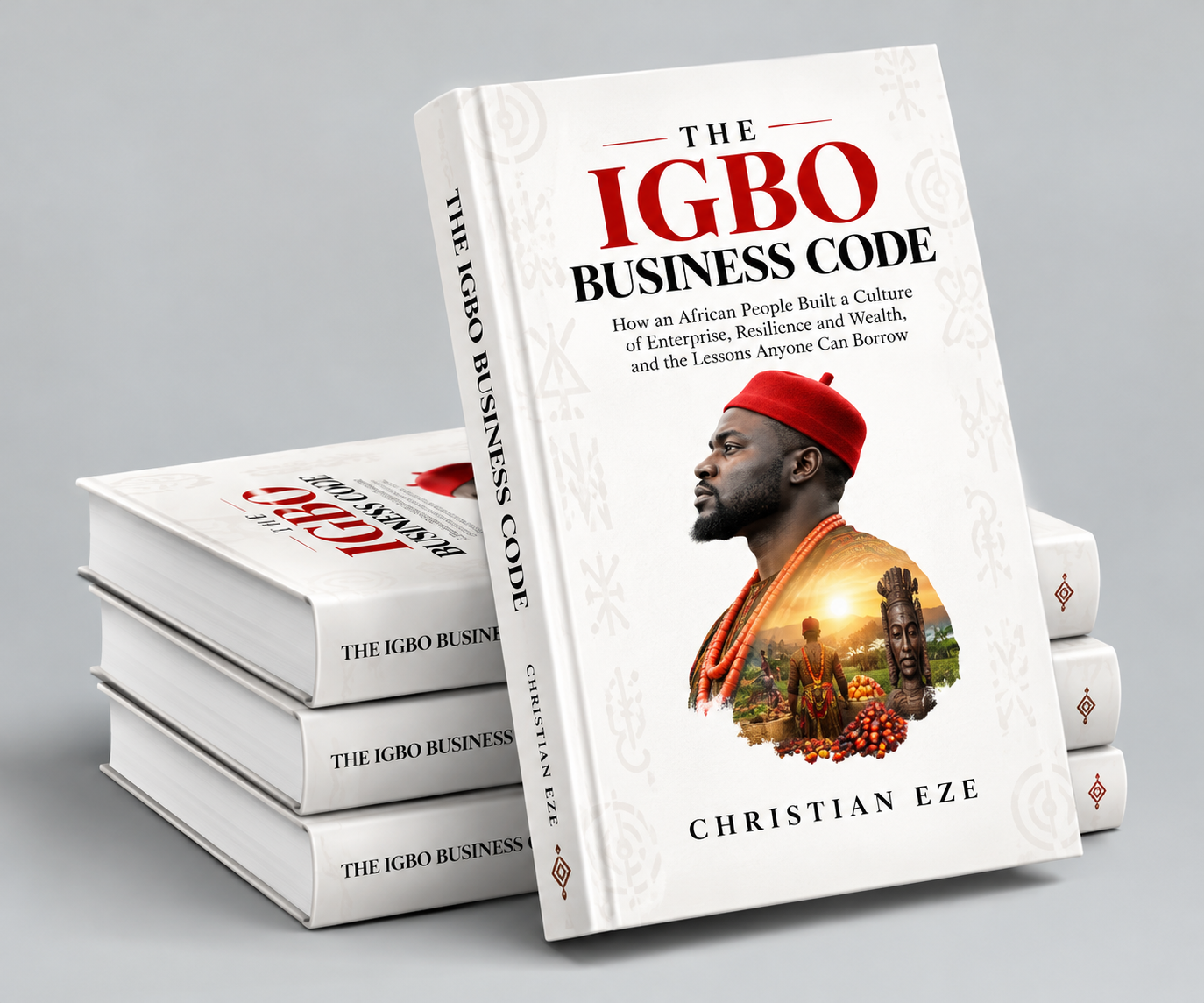
THE IGBO BUSINESS CODE
How an African People Built a Culture of Enterprise, Resilience and Wealth — and the Lessons Anyone Can Learn
Have you ever met the Igbo? If you haven't, you should visit Eastern Nigeria.
I began to understand the Igbo way of life after a crisis forced my family to return to the East. I was born in Kaduna and knew very little about my own people. I still remember how some people spoke about me because I was Igbo. Once, a stranger looked at me and said, “This boy can sell you and collect change.”
At the time, I didn't understand what he meant. It was only after moving back to the East that I began to see what he was talking about.
The East is a wonderful place, especially for anyone who wants to work hard, build something and make a living. Life is not always easy, but there is a strong spirit of hard work and self-reliance. These are people who understand what it means to lose almost everything and start again.
One thing that often surprises people is how some wealthy business owners dress. You may see a man wearing shorts and a singlet, running around his shop and attending to customers. You might think he is an ordinary trader with little money. But you may later discover that he is worth millions or even billions.
From a distance, some people may see the Igbo as proud or arrogant. But when you get closer, you may discover something different: hardworking people, generous people, and people who are willing to help others rise. Through business, mentorship and apprenticeship, some have helped young people move from having almost nothing to owning successful businesses.
There is a lot to learn from the Igbo when it comes to business, making money and overcoming challenges.
That is why I wrote this book.
I am sharing my personal experiences and the lessons I have learned since leaving Kaduna and returning to the East. I am still learning and growing, but I believe these lessons can help anyone, regardless of their tribe, country or background.
I want you to understand how the Igbo approach business, identify the useful lessons and apply them to your own life.
I have come to realise that what many people see as a secret is actually a set of habits, values and practices. It is not magic, and it is not something that only the Igbo can do.
It is a code. And if I can understand it, you can learn it too.
Now, the question many people ask has an answer.
“How do the Igbo do it?”
You hear this question in markets, offices and online discussions. You may have asked it yourself, out of curiosity, admiration, envy or even frustration.
Many people explain Igbo business success with words like luck, tricks or special talent. Some even say it is in their blood.
But business success is not simply about luck or blood. There are habits, values and decisions behind it.
My father's story is one example.
He became an orphan at the age of eight. He lost his brothers and sisters during the Biafra war, and only he and one sister survived. With very little to depend on, he worked under different masters before eventually becoming a builder and raising a family.
His journey taught me that a difficult beginning does not have to determine how your story ends.
There are lessons in stories like his: hard work, patience, learning from others, resilience and the courage to start again.
These lessons can be learned by anyone.
Inside this book, you will discover:
✔ Why some wealthy business owners dress simply — and why building wealth is often more important to them than showing it off.
✔ Igba Boi, the apprenticeship system — how young people learn a trade, serve under an experienced business owner and may eventually receive support to start their own businesses.
✔ How to turn envy into opportunity — and why you can learn from someone even if you do not agree with them.
✔ The Four Pots Method — a simple way to divide your income and make sure your business grows instead of spending everything you earn.
✔ How trust can become business capital — and why your reputation can open doors that money alone cannot.
✔ How to set business goals — recognise when something is not working and change your approach before losing everything.
✔ How to see opportunities in everyday problems — and build a business around needs that other people ignore.
✔ The hidden cost of hard work — including stress, burnout and family problems, and how to avoid them.
✔ What hatred can cost us — and why refusing to learn from others can hold us back.
✔ The weaknesses of the business culture — because every system has lessons to offer, but also problems that must be questioned.
✔ How to create your own Business Code — with a simple template and a 90-day action plan to help you put what you learn into practice.
This is not a book about praising one tribe. It is a book about learning useful lessons.
No tribe has a monopoly on success. This book is not written to attack or look down on anyone.
It is built on one simple belief: good ideas and good habits can be learned by everyone.
You do not have to be Igbo to learn from the Igbo. You can take the lessons that work for you while keeping your own culture, beliefs and identity.
Each chapter begins with a story or real-life example and ends with key lessons, questions to think about and a practical task for the week.
The goal is not just for you to read this book. The goal is for you to use what you learn.
Written in simple English, this book takes you through everyday business life — from markets and workshops to homes, villages and classrooms.
This book is for you if:
- You want to start a business but have little or no capital.
- You are working hard but not making the progress you expected.
- You want to understand how successful business communities build wealth.
- You are an entrepreneur looking for better ways to grow your business.
- You are a parent, mentor or business owner who wants to help others succeed.
- You believe there is something to learn from people whose success you admire, even if you do not always agree with them.
A Note from the Author
I wrote this book because I once knew very little about the business culture I was part of.
I was born in Kaduna, and it was only after moving back to the East that I began to understand the people, their way of doing business and the values behind their success.
I watched, listened, asked questions and learned from experience.
I realised that there was no magic secret. There were habits and choices that people made every day. Some were good, some were not, but many contained lessons worth sharing.
If someone like me, who knew so little about this culture, could begin to understand it, then you can learn from it too.
You don't have to be Igbo to learn from the Igbo. You only need to be willing to learn.
Get your copy of The Igbo Business Code today and discover the lessons you can use to build your own success story.
Open the shutter. Write the first line. Begin.
Christian Eze

 WDigital