
NVIDIA has reinstated co-founder Jensen Huang as its President and CEO less than two weeks after announcing his resignation. The board voted unanimously to bring him back, while maintaining an independent investigation into reported foreign intelligence concerns and strengthening its national security and export-control oversight.
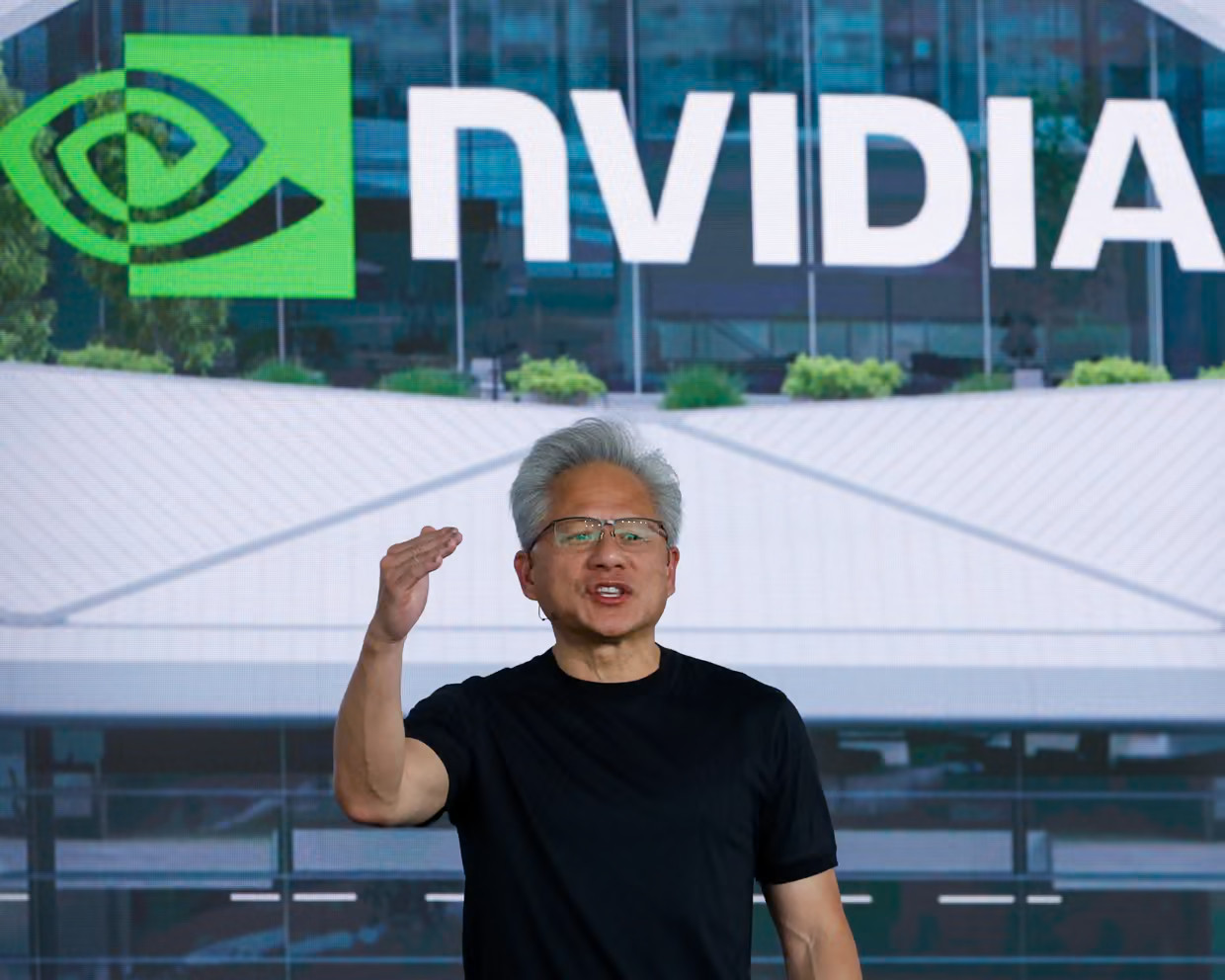
NVIDIA Reinstates Jensen Huang as CEO After Dramatic Leadership Reversal
NVIDIA has reinstated its co-founder, Jensen Huang, as President and Chief Executive Officer, bringing an unexpected end to a leadership transition that lasted less than two weeks.
The announcement was made on November 23, 2026, after the company's board of directors voted unanimously to return Huang to his previous positions as CEO, president and board director.
The decision reverses NVIDIA's November 12 announcement that Huang had resigned and that its Chief Financial Officer, Colette Kress, would take over as interim CEO while the company searched for a permanent replacement.
The development is significant because NVIDIA is one of the world's most influential technology companies. Its processors and computing platforms play a major role in the development of artificial intelligence, cloud computing and advanced data centres.
However, Huang's return does not mean all the issues surrounding his departure have been resolved. The company says an independent investigation into reported foreign intelligence activity targeting him will continue. NVIDIA is also strengthening its national security and export-control oversight.
The announcement has attracted international attention, particularly because of the company's importance to the global AI industry and the questions raised about corporate governance and national security.
1. What Happened at NVIDIA?
On November 23, NVIDIA announced that Jensen Huang had been reinstated as its President and CEO, effective immediately.
The company's board said it reached the decision after a series of discussions and meetings with Huang.
According to the official announcement, the directors were satisfied with his candour and ability to lead the company.
The board also said it had received input from senior levels of the United States government. Based on that input, it concluded that Huang's reinstatement did not pose a national security risk.
Harvey C. Jones, NVIDIA's board chair, said the directors believed Huang was the right person to lead the company and that his return was in the best interests of shareholders, employees, business partners and customers.
Huang welcomed the decision and expressed appreciation to the board, employees, shareholders and business partners.
The company confirmed that Harvey Jones would remain board chair, while Colette Kress would return to her continuing responsibilities as Chief Financial Officer.
2. Why Did Jensen Huang Leave NVIDIA?
NVIDIA announced Huang's resignation on November 12, 2026.
In that announcement, the company said he had resigned as President, CEO and a member of the board, effective immediately.
Colette Kress was appointed interim CEO, and the board said it would consider internal and external candidates for a permanent replacement.
The initial announcement did not provide a detailed explanation of the circumstances surrounding his resignation.
However, subsequent reporting by Reuters connected the leadership crisis to revelations about Huang's personal conduct and reported concerns involving a foreign intelligence effort.
Reuters reported that Huang had acknowledged being unfaithful to his wife and had apologised publicly. The news agency also reported allegations involving a Chinese businesswoman accused of having connections to Beijing.
These allegations should be treated carefully. They do not establish that Huang committed espionage or that NVIDIA's confidential information was compromised.
The company has said it is investigating reports that Huang was targeted by a foreign intelligence effort. Its November 23 announcement did not declare that the investigation had been completed.
This distinction matters because the company has reinstated Huang while the investigation is still ongoing.
3. Why Did NVIDIA Bring Jensen Huang Back?
NVIDIA has not published a detailed explanation of every factor behind its decision.
Its official statement says the board held discussions with Huang, assessed his candour and leadership ability, and received input from senior US government officials.
Reuters also reported that US President Donald Trump strongly supported Huang's return, alongside industry leaders and some investors.
Trump told CNBC that his intervention had been important in securing Huang's reinstatement.
The board's decision came less than a week after its chair had indicated that Huang would not be brought back and that the company was considering a permanent successor.
This rapid reversal has raised questions about how the board reached its decision and how independent its process was.
There is also a business argument for maintaining leadership continuity.
Huang co-founded NVIDIA in 1993 and has played a central role in transforming it from a graphics-chip company into a major supplier of accelerated computing and AI infrastructure.
His knowledge of the company's products, customers, suppliers and long-term strategy makes him an important figure in its operations.
However, the importance of a founder does not remove the need for accountability, proper governance and independent oversight.
4. Who Is Jensen Huang?
<escape>Jensen Huang</escape> is a Taiwanese-American technology entrepreneur and the co-founder of NVIDIA.
He established the company in 1993 with Chris Malachowsky and Curtis Priem.
NVIDIA initially became known for developing graphics processing units (GPUs), which are widely used in computer graphics and gaming.
Over time, the company's technology expanded into several important areas, including:
- Artificial intelligence.
- Data centre computing.
- Autonomous vehicles.
- Robotics.
- Scientific research.
- High-performance computing.
- Professional graphics and visual computing.
NVIDIA's GPUs have become particularly important in AI development because they can process large amounts of information in parallel.
This makes them useful for training and running advanced AI models.
Huang's leadership has been central to NVIDIA's transformation and its growing influence in the global technology industry.
His return therefore matters not only to NVIDIA employees and shareholders but also to companies that depend on its computing platforms.
5. What Happens to Colette Kress?
Colette Kress served as NVIDIA's interim CEO following Huang's resignation.
She joined NVIDIA in September 2013 and has served as its Executive Vice President and Chief Financial Officer.
Before joining NVIDIA, she held senior finance positions at major technology companies, including Cisco and Microsoft.
During the temporary leadership arrangement, Kress was responsible for leading the company alongside its executive team.
Following Huang's reinstatement, NVIDIA confirmed that Kress would continue as Executive Vice President and CFO.
Her role is important because NVIDIA is managing a period of rapid growth, major infrastructure investment, complex international supply chains and increasing regulatory attention.
The company will continue to depend on its finance leadership to manage its financial performance, reporting and relationships with investors.
6. Why Is the Foreign Intelligence Investigation Important?
One of the most sensitive issues surrounding Huang's return is the investigation into reports that he was targeted by a foreign intelligence effort.
On November 8, NVIDIA's board announced that it was initiating an independent investigation.
The board said a committee made up entirely of independent directors would oversee the investigation with assistance from independent legal counsel.
The company also said at the time that it had no reason to believe that national security or NVIDIA's confidential information had been compromised.
The November 23 announcement confirmed that the investigation would continue until completion.
Huang has said he supports the investigation and is committed to cooperating with it.
There are several reasons this matter is important.
First, NVIDIA produces advanced computing technology that has significant commercial and strategic value.
Second, its products are used by businesses, research institutions and governments around the world.
Third, the company operates in an industry where access to advanced semiconductor technology is closely connected to national security and international trade policy.
If an investigation identifies weaknesses in how sensitive information is protected, NVIDIA may need to strengthen its internal controls and security procedures.
However, the existence of an investigation does not establish that sensitive information was stolen or that a foreign government successfully compromised the company.
7. NVIDIA Creates a National Security and Export Control Committee
Alongside Huang's reinstatement, NVIDIA has announced additional oversight measures.
The board has established a National Security and Export Control Committee made up entirely of independent directors.
The committee will oversee issues involving trade compliance and national security risks.
NVIDIA also said it would engage legal advisers with experience in national security matters. Those advisers are expected to bring in additional specialists where necessary.
Another important development is the company's decision to begin searching for a new Chief Compliance Officer.
The new executive will oversee compliance across NVIDIA and report to the board's Nominating and Corporate Governance Committee.
These steps suggest that NVIDIA wants to strengthen its oversight of sensitive business activities as it faces increasing attention from regulators and government authorities.
The measures also matter because semiconductor companies operate under complex international export-control requirements.
8. Why Are US Export Controls Important to NVIDIA?
NVIDIA's business is closely connected to international semiconductor trade.
The company supplies advanced processors and computing systems to customers across different regions.
However, the United States has introduced export restrictions covering certain advanced computing chips and related technologies.
These restrictions are designed to control access to technology that the US government considers important to national security.
China is particularly important in this discussion because it is a major technology market, but access to some advanced computing products is restricted by US export-control rules.
NVIDIA must therefore balance international business opportunities with its legal obligations.
The company needs to ensure that products are sold, transferred and used in ways that comply with applicable regulations.
Failure to follow export-control rules could expose a company to investigations, financial penalties, restrictions and reputational damage.
For NVIDIA, strengthening compliance oversight is therefore not simply an administrative matter. It is connected to the company's ability to operate in global markets.
9. How Did Investors React to Jensen Huang's Return?
The announcement attracted significant attention from financial markets.
Reuters reported that NVIDIA shares surged approximately 33% following the reinstatement announcement, adding more than $900 billion to the company's market value at the time of the report.
However, the increase did not erase all the losses recorded since Huang's resignation on November 12.
The reaction suggests that investors viewed the return of the company's co-founder as a positive development for leadership stability.
Investors may have been concerned about the uncertainty surrounding a sudden leadership change at a company that plays such a central role in the AI industry.
Huang's return could reassure some shareholders that NVIDIA's existing business strategy and product roadmap will continue with familiar leadership.
Nevertheless, a rise in the share price does not mean every concern surrounding the company has disappeared.
Investors will continue monitoring its financial results, leadership decisions, regulatory issues and ability to maintain its position in the global AI market.
10. What Does Jensen Huang's Return Mean for the Global AI Industry?
NVIDIA is an important supplier to the global AI ecosystem.
Its processors are used by cloud providers, research organisations, technology companies and developers building advanced AI systems.
Many businesses depend on NVIDIA's products to train and operate large AI models.
A sudden leadership change at the company could therefore create uncertainty for customers, suppliers and investors.
Huang's return may provide reassurance that the company's existing technology strategy will continue.
However, the wider AI industry faces challenges beyond leadership changes.
These include:
- The high cost of building AI data centres.
- Competition from other semiconductor manufacturers.
- International export restrictions.
- Increasing demand for electricity and computing infrastructure.
- Concerns about the financial returns from AI investment.
- The need for stronger cybersecurity and regulatory compliance.
NVIDIA's ability to manage these challenges will influence its future performance and its position in the technology industry.
11. What Happens Next at NVIDIA?
Several developments will be important to watch following the reinstatement.
Completion of the independent investigation: The board has confirmed that its investigation into reported foreign intelligence activity targeting Huang will continue.
Appointment of a Chief Compliance Officer: NVIDIA is beginning the process of finding an executive to oversee company-wide compliance.
National security oversight: The newly created board committee will focus on trade compliance and national security risks.
Leadership stability: Investors and employees will want to see how the board and Huang work together after the unexpected leadership changes.
Government investigations: NVIDIA has confirmed that it will continue cooperating with government investigations and inquiries.
Congressional scrutiny: Reuters reported that Huang agreed to testify at a public US Senate hearing scheduled for December 3, 2026.
These developments could influence how investors, regulators and business partners assess NVIDIA over the coming months.
Frequently Asked Questions
Is Jensen Huang still the CEO of NVIDIA?
Yes. NVIDIA announced on November 23, 2026, that its board had reinstated Jensen Huang as President and CEO, effective immediately.
Why did Jensen Huang resign from NVIDIA?
NVIDIA announced his resignation on November 12, 2026, without providing a detailed explanation in its initial announcement. Subsequent Reuters reporting connected the departure to revelations about his personal conduct and reported concerns involving a foreign intelligence effort.
Who became NVIDIA's interim CEO?
Colette Kress, NVIDIA's Executive Vice President and Chief Financial Officer, served as interim CEO after Huang's resignation.
Is Colette Kress still working at NVIDIA?
Yes. Following Huang's return, NVIDIA confirmed that Kress would continue as Executive Vice President and Chief Financial Officer.
Did NVIDIA complete its investigation before reinstating Jensen Huang?
No. NVIDIA's November 23 announcement explicitly stated that the independent investigation would continue to its conclusion.
Was NVIDIA's national security investigation about confirmed espionage?
The company said it was investigating reports that Huang had been targeted by a foreign intelligence effort. This does not establish that espionage occurred or that NVIDIA's confidential information was compromised.
Did NVIDIA shares rise after Huang returned?
Yes. Reuters reported that the company's shares rose approximately 33% following the reinstatement announcement, although the gains did not erase all the losses recorded since his resignation.
Why is Jensen Huang important to NVIDIA?
Huang co-founded NVIDIA in 1993 and has led its development into a major supplier of graphics processors, AI computing systems and data centre technology.
What is NVIDIA's new Chief Compliance Officer expected to do?
The company plans to appoint a Chief Compliance Officer to oversee compliance across its operations. The role will report to the board's Nominating and Corporate Governance Committee.
Conclusion: Jensen Huang Returns, but NVIDIA's Challenges Are Not Over
NVIDIA's decision to reinstate Jensen Huang marks a major reversal in one of the technology industry's most closely watched leadership developments of November 2026.
His return restores the company's long-time co-founder to its most senior executive position after a brief period in which Colette Kress served as interim CEO.
For investors and business partners, the decision may provide greater confidence in leadership continuity at a company central to the global AI industry.
However, important questions remain.
The investigation into reported foreign intelligence activity is unfinished. NVIDIA is strengthening its national security and export-control oversight, and the company continues to face government scrutiny.
The board must now demonstrate that it can maintain effective oversight while working with a founder whose leadership has been central to the company's success.
Jensen Huang is back as NVIDIA's CEO, but the next chapter will be about more than his return. It will also test the company's corporate governance, national security controls and ability to maintain investor confidence.